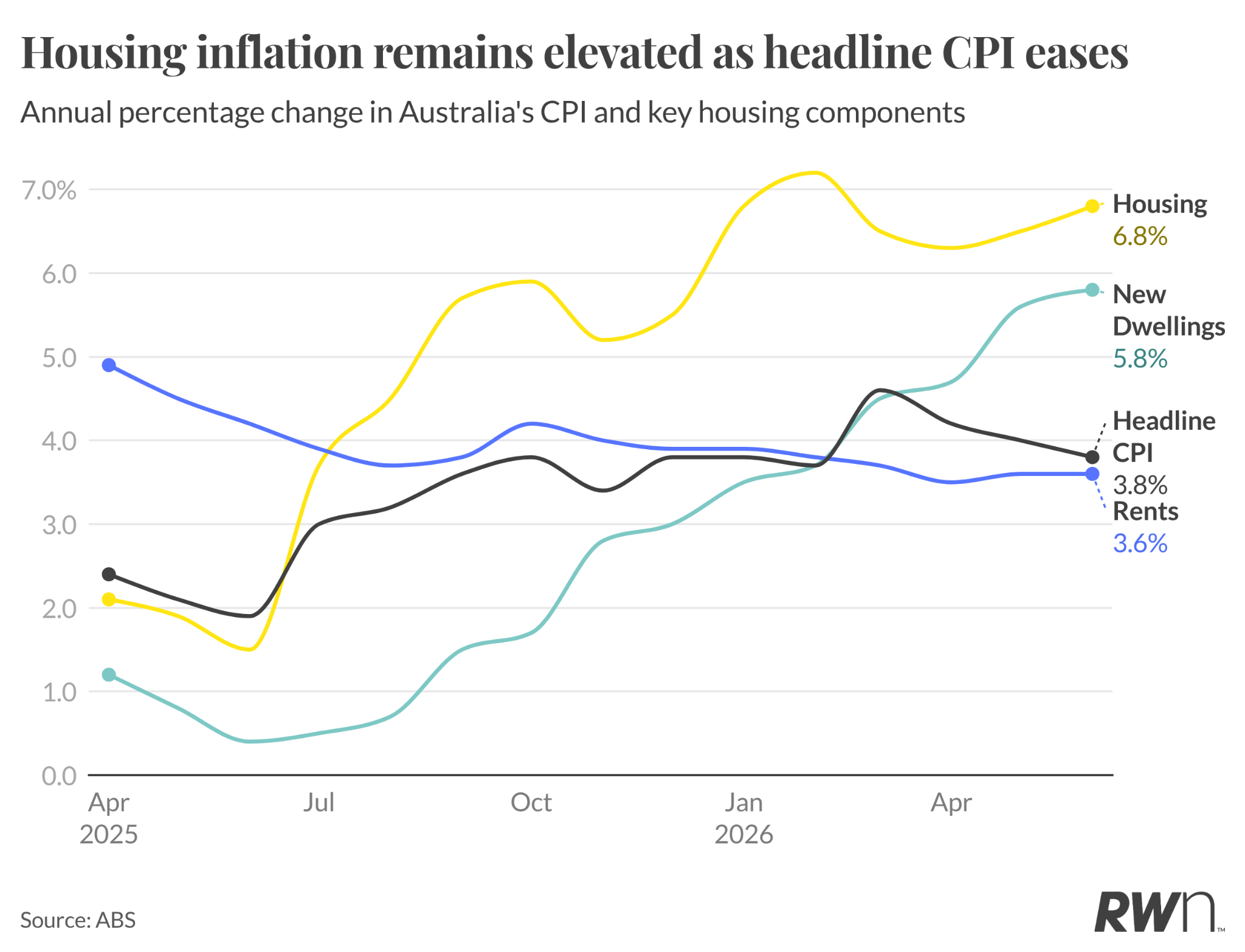
Higher interest rates are meant to bring inflation down. They also make new housing more expensive to build. The two largest policy forces acting on housing right now are pulling against each other.
Importantly, established house prices are not included in the CPI. Housing inflation is instead driven by costs including rents, new dwelling construction and utilities. This means house prices can fall while the housing costs captured by inflation continue to rise.
Electricity was a major part of the latest increase, rising 22.4 per cent over the year as government rebates ended. However, the pressure extends beyond energy. New dwelling costs rose 5.8 per cent as builders continued to pass on higher labour and materials costs, while rents increased by 3.6 per cent.
This is where the challenge for monetary policy becomes more complicated. The RBA is using higher interest rates to slow demand and bring inflation down. But higher rates do little to address many of the pressures currently driving housing inflation. They do not reduce construction costs or create more homes. Instead, they increase financing costs for developers and make some new projects less viable.
Housing policy is creating another complication. Federal Budget changes appear to be weakening investor demand. While that may contribute to lower property prices, fewer investors also means less potential rental supply. The impact is not yet substantially visible in the CPI because it takes time for changes in investor activity to flow through to the rental market, but we expect this to become more apparent over coming months.
The result is an unusual divergence. House prices are already falling, but that does not necessarily mean housing is becoming cheaper. Construction costs remain elevated, rents continue to rise and the cost of adding new housing remains high.
This is where housing policy and monetary policy are working against each other. The RBA is using higher interest rates to reduce demand and bring inflation down, but those same higher rates make new housing development more expensive and less viable. At the same time, Federal Budget changes risk reducing investor participation, which could further constrain rental supply and put upward pressure on rents. Monetary policy is therefore trying to suppress housing-related inflation while housing policy risks adding to the supply pressures that are helping to keep it elevated.