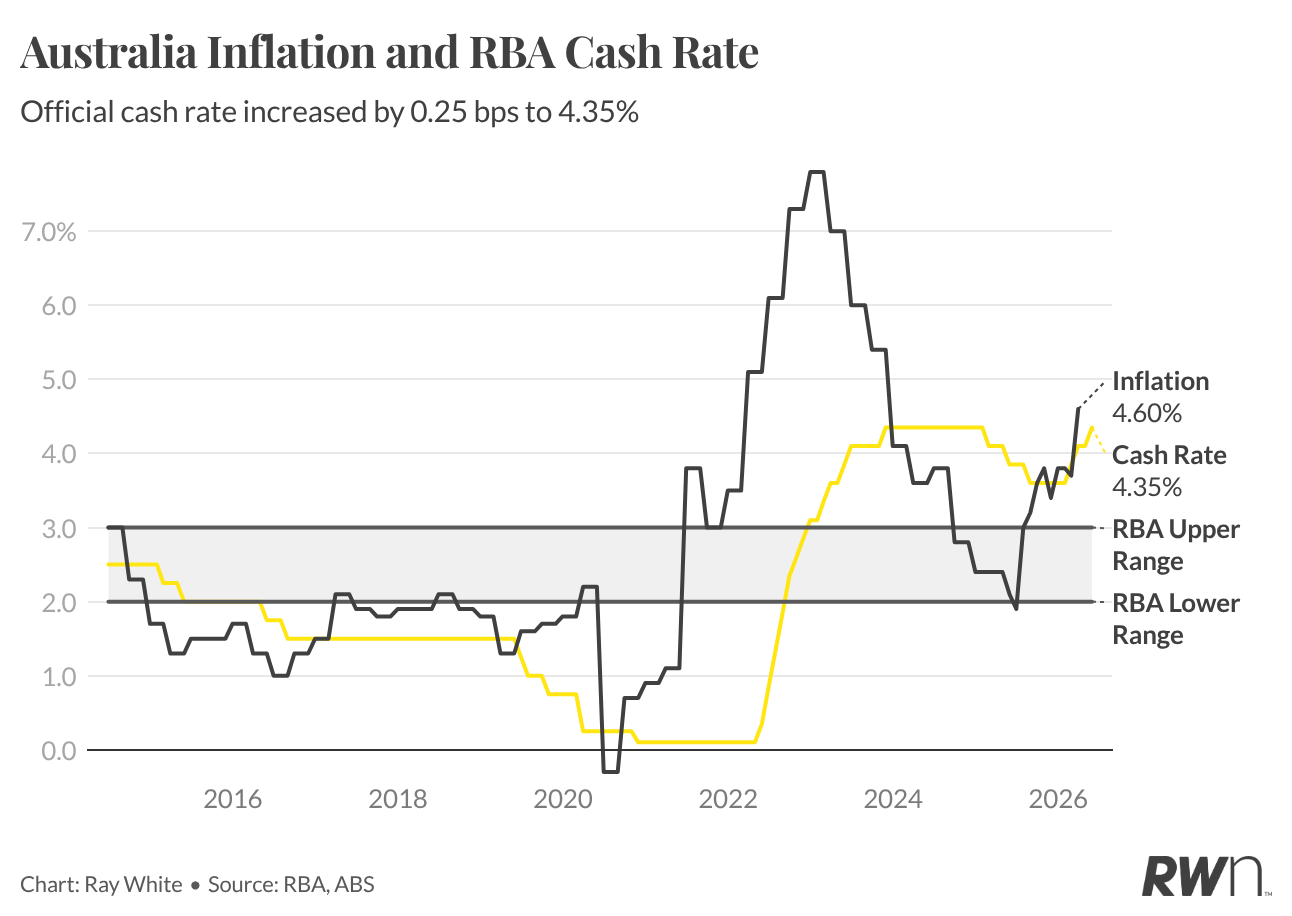
Today’s rate rise responds to inflation moving in the wrong direction, with housing sitting at the centre. Fuel, rental pressure and construction costs are all rising, creating a complex problem that extends beyond what rates can solve.
The Reserve Bank has increased the cash rate by 0.25 percentage points, responding to a renewed lift in inflation and the risk that price pressures become more persistent.
The latest CPI data showed inflation rising to 4.6 per cent over the year to March, up from 3.7 per cent in February. While fuel saw the greatest percentage increase, the more important issue for the RBA is that inflation is not confined to one area. Housing, transport and food remain the largest contributors, with housing continuing to sit at the centre of Australia’s inflation problem.

Fuel prices have risen sharply as conflict in the Middle East pushes global oil prices higher. Automotive fuel rose 32.8 per cent in March alone, the strongest monthly increase since the series began in 2017. This is a supply shock rather than a sign of strong domestic demand, but it still matters because petrol prices are highly visible. They influence inflation expectations, household budgets and business transport costs.
In some ways, higher fuel prices are already doing part of the RBA’s work. They are reducing household spending power at a time when consumer confidence is already extremely weak. ANZ-Roy Morgan Consumer Confidence rose to 67.8 in late April, but this remains one of the lowest readings in the history of the series and well below last year’s level.
The challenge is that Australia’s inflation problem is still heavily tied to housing. The housing group rose 6.5 per cent over the year, with electricity, new dwellings and rents the key drivers. New dwelling prices rose 4.5 per cent, reflecting builders passing through higher labour and materials costs. Construction costs are no longer rising at the extraordinary pace seen during the pandemic, but they continue to weigh on inflation and make it harder to deliver new housing at scale.
Rents remain one of the most important risks. Rental prices rose 3.7 per cent over the year, with the ABS noting that rental inflation continues to reflect low vacancy rates across the capital cities. With vacancy rates already extremely tight, any federal budget measures that discourage property investment risk reducing the supply of rental housing further. Fewer rental properties would place additional upward pressure on rents, particularly in markets already struggling with population growth and limited new supply.
This is the difficult policy trade-off. Higher interest rates can slow demand, but they do not build houses, lower construction costs or increase rental supply. In fact, higher borrowing costs can make new housing projects less viable and discourage private investors, potentially adding to the rental shortage over time.
The labour market also argues for caution. Headline unemployment remains around 4.3 per cent, but weakness is emerging beneath the surface. Youth unemployment has lifted to around 11 per cent nationally, up from around 9 per cent late last year, and job ads have fallen for seven straight months. These are early signs that the economy is weakening considerably
Despite these risks, the RBA has chosen to act because inflation is moving in the wrong direction and expectations must remain anchored. The increase signals that the Bank is not prepared to look through renewed price pressure while inflation remains above target.
For property markets, the impact will be mixed. Higher rates will reduce borrowing capacity and weigh on buyer demand. But Australia’s housing shortage remains severe. Strong population growth and weak construction activity mean prices and rents are likely to remain supported, even as higher rates slow momentum.
The RBA’s message is clear: inflation control remains the priority. But the longer-term solution to Australia’s most persistent inflation problem will not come from interest rates alone. It will come from more housing supply, lower construction barriers and policies that encourage, rather than discourage, rental investment.